
Unilateral Arbitrator Appointment: Legal Position in India
Unilateral Arbitrator Appointment has become a common issue in loan recovery disputes involving banks and financial institutions. In many cases, arbitrators are appointed solely by the lender, which creates serious concerns about neutrality and fairness.
However, such practices have increasingly been questioned by courts in India. The judiciary has emphasised that arbitration must remain impartial and independent under the Arbitration and Conciliation Act, 1996. Therefore, unilateral appointments by one party, especially banks or recovery agents, are often declared invalid.
Moreover, borrowers frequently face harassment from recovery agents while arbitration proceedings are initiated. Because of this, guidelines issued by the Reserve Bank of India require that recovery processes be conducted in a fair and dignified manner.
Table of Contents
Why Unilateral Arbitrator Appointment Is Considered Invalid?
A Unilateral Arbitrator Appointment is considered problematic because arbitration relies on neutrality. When an arbitrator is appointed solely by one party, doubts regarding independence are automatically raised.
Furthermore, courts have repeatedly held that a party cannot act as the sole judge in its own cause. This principle was reinforced by the landmark judgment in Perkins Eastman Architects DPC v. HSCC (India) Ltd., where unilateral appointment clauses were effectively invalidated.
As a result, arbitration clauses that allow only one party to appoint an arbitrator are often struck down or modified by courts.
Delhi High Court Ruling on Unilateral Arbitrator Appointment
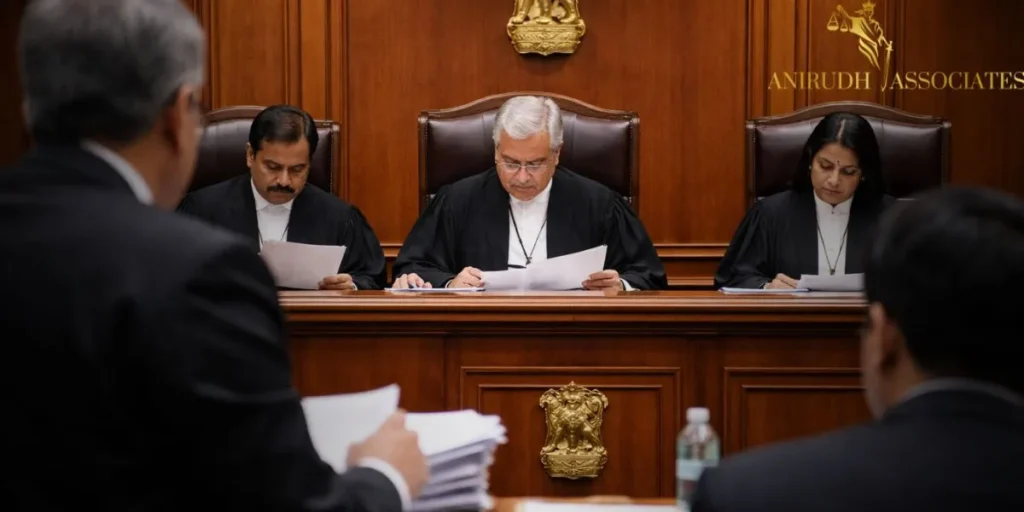
A recent ruling by the Delhi High Court further clarified the issue in Neosky India Limited v. Nagendran Kandasamy.
In this case, arbitration was invoked through a notice dated 18.07.2024 after alleged breaches of a shareholders’ agreement. However, the respondents failed to nominate an arbitrator within the stipulated 30 days.
Consequently, the court intervened under Sections 11(6) and 11(16) of the Act. A neutral arbitral tribunal was appointed by the court to ensure fairness in the arbitration process.
Importantly, the court limited its examination to the prima facie existence of an arbitration agreement, following the principle laid down in SBI General Insurance Co. Ltd. v. Krish Spinning.
RBI Guidelines on Recovery Agents and Arbitration
Additionally, the Reserve Bank of India has issued strict guidelines regarding recovery practices by banks and financial institutions.
According to these guidelines:
- Borrowers must not be intimidated or threatened.
- Recovery agents must follow ethical practices.
- Arbitration should not be used as a pressure tactic.
- Arbitrators should be appointed neutrally.
Therefore, when unilateral arbitrator appointments are made along with coercive recovery practices, such actions may be challenged legally.
How Borrowers Can Challenge Unilateral Arbitrator Appointment?
If a Unilateral Arbitrator Appointment is imposed, borrowers can take several legal steps.
First, the arbitration notice should be examined carefully. If the clause allows unilateral appointment, objections should be raised immediately.
Second, a response should be filed within 30 days nominating an independent arbitrator.
However, if the other party refuses to cooperate, an application can be filed before the High Court under Section 11 of the Arbitration and Conciliation Act, 1996.
Additionally, interim relief can be sought under Section 9 to prevent harassment or coercive recovery actions.
Practical Steps for Borrowers
Borrowers facing unilateral arbitration proceedings should consider the following actions:
- Arbitration notices should be responded to promptly.
- Evidence of harassment by recovery agents should be documented.
- Legal advice should be obtained immediately.
- Courts can be approached for a neutral arbitrator appointment.
- If necessary, borrowers may approach the courts to request a neutral arbitrator or to initiate appropriate legal remedies, such as a money recovery lawyer in Bangalore, to resolve financial disputes.
Consequently, borrowers are protected by biased arbitration mechanisms.
Judicial Approach Toward Neutral Arbitration
Indian courts have consistently emphasized the importance of neutrality in arbitration. Therefore, unilateral arbitrator appointment clauses are increasingly scrutinized.
Furthermore, courts have relied on the doctrine of severability under Section 16 of the Arbitration and Conciliation Act, 1996. Even if an arbitration clause contains an invalid unilateral appointment provision, the clause itself may survive while the appointment mechanism is modified.
As a result, independent arbitrators are often appointed by courts to maintain fairness.
Legal Protection Against Unilateral Arbitrator Appointment in India
In conclusion, the legality of a Unilateral Arbitrator Appointment has been repeatedly questioned by Indian courts. Arbitration cannot function effectively if the process lacks neutrality.
Therefore, borrowers must remain aware of their legal rights under arbitration law and RBI guidelines. If unilateral appointment clauses are misused by lenders or recovery agents, judicial remedies are available.
Ultimately, arbitration should remain a fair dispute resolution mechanism rather than a tool for financial pressure.