
Home » CIRP Defence Lawyer in Bangalore
CIRP Defence Lawyer in Bangalore
CIRP Defence for Corporate Debtors, Directors and Promoters
Opposing admission, settling early, and safeguarding promoters in proceedings before the NCLT and NCLAT
- Fighting against Section 7 and Section 9 applications
- Replying to Section 8 demand notices
- Settling and withdrawing cases before admission
- Withdrawing cases after admission under Section 12A
- Defending against claims relating to avoidance transactions
- Guidance on risks for personal guarantors
Admission Changes Everything, So Act Before It Happens
In case a creditor files an application against your company under the Insolvency and Bankruptcy Code, 2016 (IBC) and the NCLT admits the same, then the moratorium under Section 14 of the Code starts. The admission of the application suspends the Board of Directors of the company and the NCLT appoints an Interim Resolution Professional to manage the company. The Interim Resolution Professional then constitutes the Committee of Creditors of the company to determine the fate of the company.
The firm represents corporate debtors, their directors and promoters in opposing, settling, or preparing for admission of applications that creditors file under the Insolvency and Bankruptcy Code, 2016 (IBC).
The firm also represents financial and operational creditors in initiating and completing the process of admission of applications that they file under the IBC.
The CIRP defense lawyers in Bengaluru assist you in:
- Responding to a Section 8 demand notice within 10 days
- Opposing admission of Section 7 or Section 9 application
- Raising defense of debt, default, limitation, pre-existing dispute.
- Negotiating and recording a settlement before admission
- Applying for withdrawal of CIRP under Section 12A after admission
- Advising directors and guarantors on personal exposure.
Key Points on CIRP Defence
Section 7, Section 8 and Section 9
- Financial creditors file petitions under Section 7.
- Operational creditors can file Section 9 applications if debtors fail to pay or dispute a Section 8 demand within 10 days.
- The NCLT verifies outstanding debt and default.
- CIRP initiation, defence strategy, and resolution advisory.
Grounds to Oppose Admission
- There is no debt or no default.
- Prior to issuing of a demand notice there was a real issue (particularly relevant in relation to Section 9).
- Claim is statute barred or default is less than one crore rupees.
- The default falls within the Section 10A period after 25 March 2020, or the application has defects or the NCLT lacks territorial jurisdiction.
Settlement and Withdrawal
- Before admission, the NCLT can allow a withdrawal on a settlement.
- After admission, Section 12A requires the approval of 90% of the Committee of Creditors’ voting share.
- The Supreme Court held in Abhishek Singh v. Huhtamaki PPL Ltd. (2023) that a Section 12A application can also come before the Committee is constituted.
- An early settlement leaves the board in control of the company.
Promoters and Guarantors
- Directors are not automatically liable for the company’s debts.
- Personal exposure can arise from personal guarantees, avoidance and wrongful trading claims, and other proceedings such as cheque bounce complaints.
- The Supreme Court held in State Bank of India v. V. Ramakrishnan (2018) that the moratorium does not protect personal guarantors.
- Section 29A can bar certain promoters from submitting a resolution plan.

Why Do You Need an Experienced CIRP Defence Advocate in Bangalore?
Our advocates help you to:
- Review the debt, the default and the limitation position before the first hearing
- Show a genuine pre-existing dispute where one exists
- Respond to a demand notice in time and in the right form
- Decide whether settlement before admission serves the company
- Prepare for the consequences if the application is admitted
- Appeal an admission order to the NCLAT without delay
The firm’s insolvency practice is assessed case by case, with no guarantee of outcome. We tell you plainly what an admission would mean for the company and its promoters before you decide how to respond.
What You Should Know About CIRP Practice Today
Pre-existing dispute is a central defence in Section 9 cases. In Mobilox Innovations Pvt. Ltd. v. Kirusa Software Pvt. Ltd. (2017), the Supreme Court said the NCLT should look for a plausible contention that needs further investigation, and it need not decide the merits. A dispute that is spurious or illusory does not help.
Many applications end in settlement. If the parties reach agreement before admission, the application can be withdrawn with the NCLT’s permission. After admission, the route is Section 12A, which needs the Committee of Creditors’ approval, so early settlement is usually easier.
The process runs on a clock. The Code provides for CIRP to complete within 180 days, extendable by 90 days, with an outer limit of 330 days including legal proceedings. In practice, real-estate and large cases often take longer.
How to Choose a Lawyer for a CIRP Defence?
A CIRP defence needs speed and care. When you meet a lawyer, check these five points:
1. Command of the IBC
Your lawyer should explain Sections 7, 8, 9, 12A and 29A, and apply them to your facts.
2. Quick, accurate responses
Short deadlines apply, such as the 10 days to answer a demand notice. Ask how the lawyer handles urgent responses.
3. NCLT and NCLAT experience
Ask how often the lawyer appears before the NCLT Bengaluru Bench and the NCLAT, including on stay applications.
4. Commercial judgment
A negotiated outcome that keeps the business running is often better than a contested admission. Your lawyer should weigh both.
5. A view of the promoters’ position
The lawyer should look at guarantees, avoidance claims and eligibility under Section 29A, along with the company’s defence.

Our Approach to CIRP Defence
Early assessment:
We review the debt, the default, limitation and any dispute, and we tell you how strong the application looks.
Focused opposition:
We present the grounds of opposition at the first hearing, including defects and jurisdiction.
Settlement and business continuity:
We negotiate with creditors and record settlements so that the company can keep trading.
Prepared for admission:
If admission looks likely, we advise on the consequences for management, contracts and promoters.
Guarantor and promoter advice:
We look at the company and its guarantors together, so that a step for one does not hurt the other.
Appeals:
We file and mention appeals to the NCLAT under Section 61 where an admission order needs challenge.
What the Firm’s CIRP Defence Practice Covers
Defence of Section 7 and Section 9 applications
Pre-admission settlement and withdrawal
Section 12A withdrawal after admission
Avoidance transaction and wrongful trading claims against promoters
Appeals to the NCLAT and the Supreme Court
Our CIRP Defence for Corporate Debtors Practice at a Glance
- Forum: NCLT Bengaluru Bench, the NCLAT and the Supreme Court.
- Demand notice: Responses to Section 8 notices within 10 days.
- Opposition: Defences on debt, default, limitation and dispute.
- Thresholds: Minimum default of ₹1 crore and the Section 10A bar.
- Settlement: Pre-admission settlement and withdrawal.
- Section 12A: Withdrawal after admission with the Committee’s approval.
- Avoidance claims: Defence of promoters in Sections 43 to 51 and 66 applications.
- Guarantors: Advice on personal guarantee exposure.
- Creditor side: Filing and concluding Section 7 and Section 9 applications.
- Appeals: NCLAT appeals under Section 61 and Supreme Court appeals under Section 62.



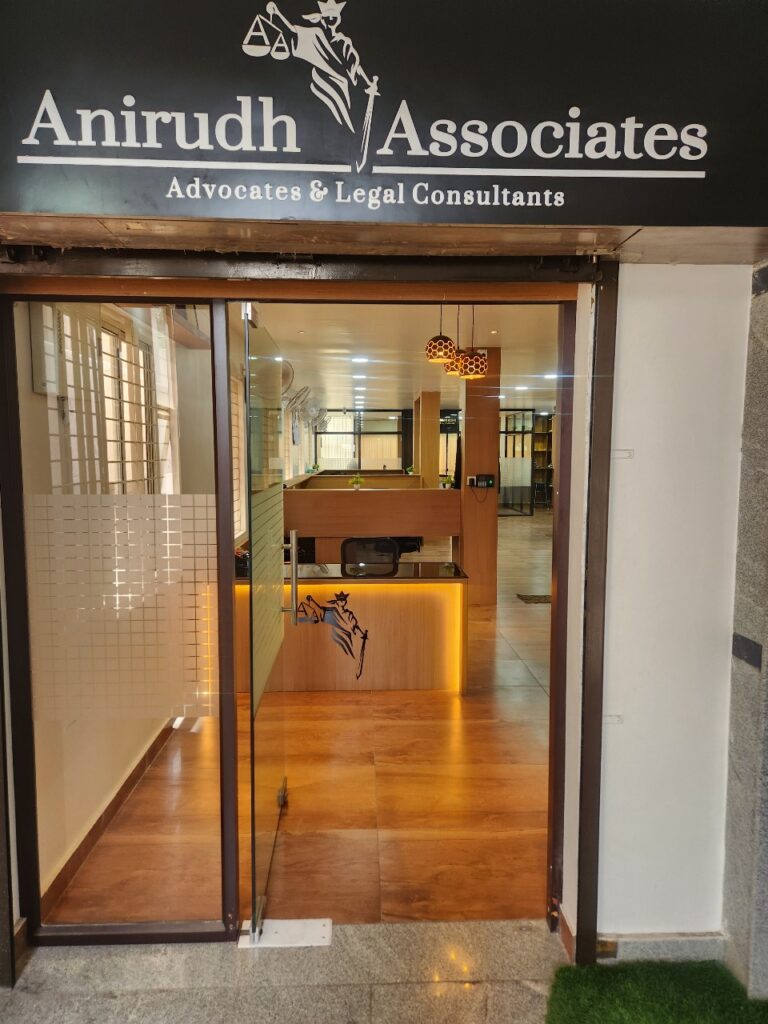
About Anirudh Associates
Meet Our Famous NCLT Advocates in Bangalore
Anirudh Associates is a law firm of advocates practising at Bengaluru and led by Advocate Anirudh Suresh. The firm appears before the National Company Law Tribunal (NCLT), the National Company Law Appellate Tribunal (NCLAT), Commercial Courts and the High Court of Karnataka, and handles matters outside Karnataka through video-conferencing and local counsel.
Frequently Asked Questions
FAQs on CIRP Defence for Corporate Debtors
Can a company stop a CIRP application before admission?
Often it can try. An application may fail if the company shows there is no debt or default, there is a genuine pre-existing dispute, the claim is time-barred or the application has defects. A settlement with the creditor before admission can also lead to withdrawal.
What happens to the management once the NCLT admits the company into CIRP?
The board is suspended and its powers pass to the Interim Resolution Professional, who runs the company as a going concern. The directors and management must cooperate with the Resolution Professional.
Can promoters settle with the creditor after admission?
Yes, through Section 12A, but withdrawal needs the approval of 90% of the Committee of Creditors’ voting share. Section 29A may also bar certain promoters from submitting a resolution plan.
What is the minimum default amount for a CIRP application?
The minimum default is ₹1 crore. Applications by homebuyers face an additional threshold that depends on the number of allottees.
Book a Consultation with the Best NCLT Law Firm in Bangalore
Speak with an experienced NCLT Lawyer in Bangalore today. Don’t let the legal problems stop your business growth.