
Home » IBC for Homebuyers (Section 7)
Section 7 IBC Petition Lawyer in Bangalore for Homebuyers
Legal Services for Homebuyers Under the IBC, 2016
Joint Section 7 Applications Against Defaulting Developers Before NCLT Bengaluru, CoC Representation and Filing of Claims
- Joint Section 7 applications by allottees.
- Verification of the 100-allottee / 10% threshold
- Claims before the Resolution Professional
- Representation through the Committee of Creditors
- Advice on RERA, consumer and NCLT remedies
- Appeals before the NCLAT and Supreme Court
File Your Claim Before the NCLT Bengaluru Bench
Delay in possession or stalled project can be taken up with RERA Karnataka authority, consumer forums or civil courts by the home buyer. The Insolvency and Bankruptcy Code, 2016 (IBC) is a further route of collective action by allottees of the developer, as financial creditors of the developer, to initiate insolvency proceedings against the developer before the National Company Law Tribunal (NCLT) and to be part of the process of deciding the fate of the project.
This route differs from individual claims for refund or possession and its objective is resolution of developer’s insolvency for all creditors. Outcome for allottees would depend on the resolution plan approved by the creditors. This route would therefore need to be assessed on a project to project basis, taking into account the number of allottees, and objectives of the buyers.
Our IBC lawyers based in Bengaluru help property buyers to litigate against non-compliant builders:
- Section 7 petitions filed before Bengaluru Bench of National Company Law Tribunal against the builders.
- Advocacy for homebuyers during Corporate Insolvency Resolution Processes (CIRP).
- Representation of buyers in the Committee of Creditors (CoC).
- Drafting and submitting a formal filing in insolvency proceedings.
- Legal advice on rights of buyers under the 2016 Insolvency and Bankruptcy Code.
- Full support to the homebuyers in the insolvency proceedings to protect their interests.
Key Points on Section 7 for Homebuyers
What Is Section 7 of the IBC?
- Initiation of CIRP against defaulting developers.
- Homebuyers are treated as financial creditors under Section 5(8)(f).
- Homebuyers can approach NCLT for CIRP upon financial default.
- Appointment of an IRP upon admission of the application.
Who Can File a Section 7 Application?
- Individual financial creditors
- Homebuyers who qualify as financial creditors under the IBC.
- Joint applications by eligible allottees for same real estate project.
- Banks and financial institutions with outstanding financial debts.
Who Is Eligible to Initiate Proceedings?
- Homebuyers who have been given units in a project.
- Allottees who meet the requirements set by Section 7(1).
- The number of allottees must be at least 100 or 10% of total allottees
- Financial creditors with proven claims and proven defaults.
RERA and Consumer Forums Compared With NCLT
- RERA complaints for delay in possession & violations by developer.
- Consumer cases for service deficiency and unfair trade practices.
- Section 7 applications for corporate insolvency proceedings.
- Collective representation through the Committee of Creditors (CoC).

Why Homebuyers Need an Experienced NCLT Advocate in Bangalore?
Our advocates help you to:
- Assess NCLT suitability for possession or refund.
- Check compliance with the 100-allottee or 10% threshold.
- Verify the applicants' homebuyer status.
- Prepare claims and documents for the Resolution Professional.
- Coordinate with the Authorised Representative in the CoC.
- Compare NCLT, RERA and consumer forum remedies.
The firm’s insolvency practice before the NCLT Bengaluru Bench with appeals to the NCLAT and Supreme Court is assessed on a case by case basis with no guarantees of outcome.
What Homebuyers Should Know About Recent NCLT Practice
A lot of applications under Section 7 are being scrutinized of late, after the Supreme Court decision in the case of Mansi Brar Fernandes v. Shubha Sharma (2025). The Tribunal can now ask a simple question in such cases: did the applicant purchase the flat for living in it or for investment purposes? If the agreement is primarily for financial gain, then the application is likely to run into problems.
The paperwork is equally important. A joint application must fulfill the requirement of 100-allottee or 10% on the day of the application, and every individual applicant must have the allotment letter, payment receipts and proof of the developer’s failure to deliver possession on the date specified in the agreement. Even a single omission can delay admission of the application, and delay hurts all the buyers in the group.
The paperwork for a Section 7 application needs to be sorted out before making an application. Three issues need to be resolved: who qualifies as a homebuyer, what documents are available and whether possession or a refund is being sought. The NCLT route is suitable for some projects but not for others.
How to Choose a Lawyer for a Section 7 Homebuyer Case
To make sure you are working with the best lawyer for a Section 7 case, check the following five points with the potential lawyer:
1. Familiarity with the IBC and real estate cases
Homebuyer cases are different from other company matters as they have their own set of rules including the 100-allottee or 10% threshold, allottees being treated as financial creditors and the role of the Authorised Representative.
2. Care with documents
A Section 7 application relies heavily on the allotment letters, the payment records and proof of default. It is therefore vital that the advocate you instruct reviews your papers early on and tells you exactly what is missing.
3. Experience before the NCLT
The Bangalore Bench of the NCLT is a very different place to other tribunals. Ask what tribunals the advocate appears before most frequently for Section 7 cases.
4. A realistic view of your goal
There are some buyers who are looking to take possession of the flat, whilst others are looking to get their money back. A good Section 7 advocate will advise on the possible outcomes of the NCLT route and whether alternative remedies such as RERA or a complaint to the Consumer Forum would be more appropriate.
5. Ease of working with a group
The Section 7 case will be a long process with many families involved. Can the advocate work with the representative of the buyers to give instructions and to receive documents and attend hearings remotely?

Our Approach to Homebuyer Cases Under the IBC
A homebuyer case under the Insolvency and Bankruptcy Code (IBC) involves more than filing a petition. A comprehensive plan needs to be developed for the project, the group of buyers and the time limits imposed by the IBC. The approach of the firm is set out below.
Our approach includes:
- Threshold and eligibility check: This is to check whether the threshold of 100-allottee or 10% is satisfied and whether the applicants are genuine homebuyers.
- Careful documentation: Preparing the application, claims and supporting records so that they are complete and consistent.
- Planning during the CIRP: Advising allottees on the resolution plan and working with the Authorised Representative, with the aim of completing the project and delivering units.
- Settlement where it makes sense: Considering a negotiated outcome with the developer, with the agreement of the other applicants and the Authorised Representative, where it serves the buyers.
- Representation before the tribunals: Appearing before the NCLT Bengaluru Bench and, where needed, the NCLAT and the Supreme Court.
- Clear advice for the group: Explaining the options plainly so that families can decide with the full picture, and keeping each group matter running through one appointed representative.


What the Firm’s Homebuyer Practice Covers?
- Joint Section 7 applications before the NCLT Bengaluru Bench
- Claims, Committee of Creditors matters and resolution plan proceedings
- Appeals before the NCLAT and the Supreme Court
- Group matters with single representative
- Hearings and document sharing in remote mode.
Our Homebuyer Practice at a Glance
- Forum: Section 7 applications in NCLT Bengaluru Bench, with Appeals to NCLAT and the Supreme Court.
- Joint filings: Preparing applications for allottees meeting the 100-allottee or 10% threshold.
- Eligibility review: Checking the debt, the default, and whether the applicants are genuine homebuyers.
- Documents: Assembling allotment letters, builder-buyer agreements, payment records and proof of default.
- Claims: Filing claims in Form CA with the Resolution Professional and pursuing remedies if a claim is under-admitted or rejected.
- Committee of Creditors: Advising allottees and coordinating with the Authorised Representative of the homebuyer class.
- Route advice: Comparing the NCLT with RERA and consumer forum remedies, depending on whether possession or a refund is sought.
- Resolution plans: Appearing in proceedings on plan approval, objections to unfair plans and diversion of buyers’ funds.
- After approval: Assisting with enforcement of the plan, including completion and handing over of units.
- Working methods: Remote hearings and document sharing, with group matters run through one appointed representative.

About Anirudh Associates
Meet Our Famous NCLT Advocates in Bangalore
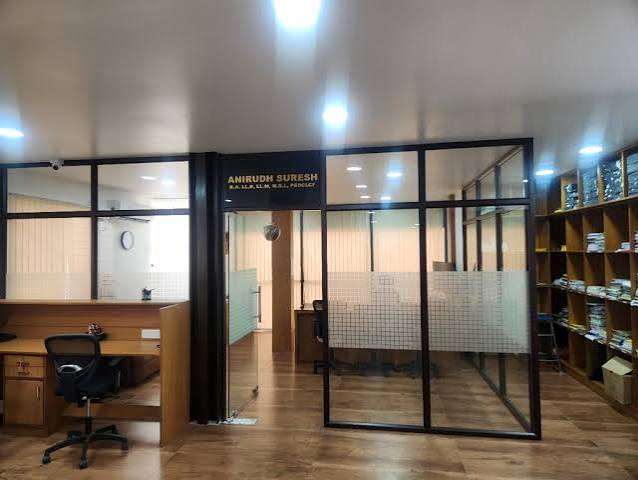
Anirudh Associates is a law firm of advocates practising at Bengaluru and led by Advocate Anirudh Suresh. The firm appears before the National Company Law Tribunal (NCLT), the National Company Law Appellate Tribunal (NCLAT), Commercial Courts and the High Court of Karnataka, and handles matters outside Karnataka through video-conferencing and local counsel.
FAQs on Section 7 IBC Petitions for Homebuyers
Can homebuyers file a Section 7 case against a builder in Bangalore?
Yes, but they cannot do it on their own. Homebuyers must file jointly with other allottees of the same project. The number of allottees must be at least 100 or 10% of the total number of allottees in the project, whichever is less. The number of allottees is counted on a project-by-project basis on the date of filing the application.
Can I approach the NCLT if I already have an order from RERA or a consumer forum?
The IBC remedies are in addition to other remedies such as those under RERA and consumer law, as was held in the case of Pioneer Urban Land and Infrastructure Ltd. v. Union of India. However, the threshold of Section 7 of the Code must be met in such cases and the application would be examined on its merits.
What happens to my flat if the builder is admitted to CIRP?
The developer is put under moratorium. An Interim Resolution Professional (IRP) is appointed to manage the affairs of the builder. The IRP will try to find a solution to the builder’s financial woes by preparing a Resolution Plan. The allottee’s claims are recognized in the CIRP and the final outcome of the allottee’s property will depend on the Resolution Plan approved by the Committee of Creditors.
How long does the CIRP of a builder take?
The Code provides for a period of 180 days with a further extension of up to 90 days, with a maximum period of 330 days including the time taken for any legal proceedings. In real estate cases, the time taken for CIRP is often longer than the statutory period and the time taken for completion of the project under the approved Resolution Plan is also outside the statutory period.
What documents are needed to file a Section 7 application as a homebuyer?
Usually, allotment letters, builder-buyer agreements, payment receipts/statements of account, demand letters sent by builder, correspondence sent by builder to the allottee showing delay in project completion, details of RERA registration of the project, promised date of possession etc. would be required. Form 1 of the Insolvency and Bankruptcy (Application to Adjudicating Authority) Rules, 2016 would be required to be filed as a homebuyer filing Section 7 application with details of other joining allottees.
Can an investor who bought a flat for speculation file a Section 7 application?
No. This was decided in Mansi Brar Fernandes v. Shubha Sharma (2025 INSC 1110) where the Supreme Court held that the Code would protect the genuine homebuyers and persons who are in substance speculative investors would not be able to invoke Section 7. Applicants must look into this aspect at the initial stage itself.
Book a Consultation with the Best NCLT Law Firm in Bangalore
Speak with an experienced NCLT Lawyer in Bangalore today. Don’t let the legal problems stop your business growth.